
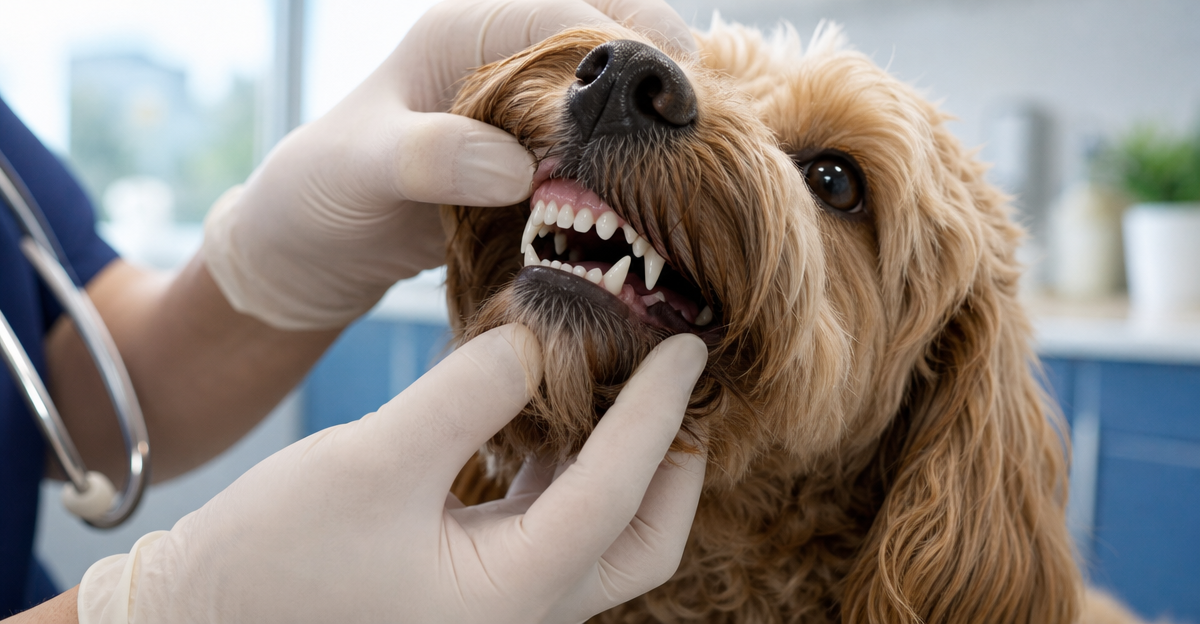
Dog dental care is one of the most overlooked parts of pet health, yet dental disease is one of the most common conditions vets see in dogs, according to both the PDSA and RSPCA. The good news? Most of it is preventable, and you don't need specialist equipment to make a real difference.
Key Takeaways
- Daily brushing is the gold standard for dog dental care at home. Three times a week is a minimum, not a target.
- Plaque hardens into tartar within days, leading to gingivitis and eventually periodontal disease if left untreated.
- Never use human toothpaste on your dog. Fluoride is toxic to dogs, and xylitol (common in whitening or sugar-free varieties) is acutely dangerous even in small amounts.
- Dental chews can help reduce plaque build-up but they supplement brushing, they don't replace it. See the dental chews section below for guidance on choosing effective products.
- A dental check as part of your dog's regular vet visits helps catch problems early. How often professional cleaning is needed depends on the individual dog.
- If your dog is staying at a boarding hotel, share their dental routine with staff and bring their toothbrush and toothpaste along.
Why Dog Dental Health Is More Serious Than Most Owners Realise
It starts quietly. Plaque, a soft film of bacteria, forms on your dog's teeth every day. Left undisturbed, it mineralises into tartar within a matter of days, creating a rough surface that traps even more bacteria. From there, gingivitis (inflammation of the gums) can develop, and without intervention it progresses to periodontal disease, where the structures supporting the teeth begin to break down.
The PDSA describes dental disease as one of the most common health issues seen in dogs. By the time most owners notice something is wrong, the disease is already well established.
There's a wider health dimension worth knowing about too. Some veterinary literature, including guidance from the World Small Animal Veterinary Association (WSAVA), notes a potential association between severe periodontal disease and systemic conditions affecting the heart and kidneys. The evidence in dogs isn't yet fully settled, and it would be wrong to overstate it. But the possibility is taken seriously enough by leading veterinary bodies that it reinforces the case for prevention rather than neglect.
Signs of Dental Disease to Watch For
Bad breath is often the first thing owners notice. There's such a thing as normal doggy breath, particularly after a dog has been eating or playing, but persistent, strong halitosis isn't something to dismiss. It usually signals that bacteria are already causing a problem.
Other signs include:
- Red, swollen or bleeding gums
- Yellow or brown build-up along the gumline (tartar)
- Difficulty eating, dropping food, or chewing noticeably on one side
- Pawing at the mouth or showing signs of facial discomfort
- Missing teeth, or visibly cracked or fractured teeth
If any of these are present, the disease is already underway. Contact your vet promptly rather than waiting for the next routine appointment. Earlier treatment means less damage, less pain for your dog, and usually lower costs.
How to Brush Your Dog's Teeth
Getting Your Dog Used to the Idea First
Don't go straight for the toothbrush. Most dogs need a gradual introduction, and rushing the process tends to backfire. Start by gently stroking the outside of your dog's cheeks and muzzle over a few days, keeping the mood calm and rewarding tolerance with praise.
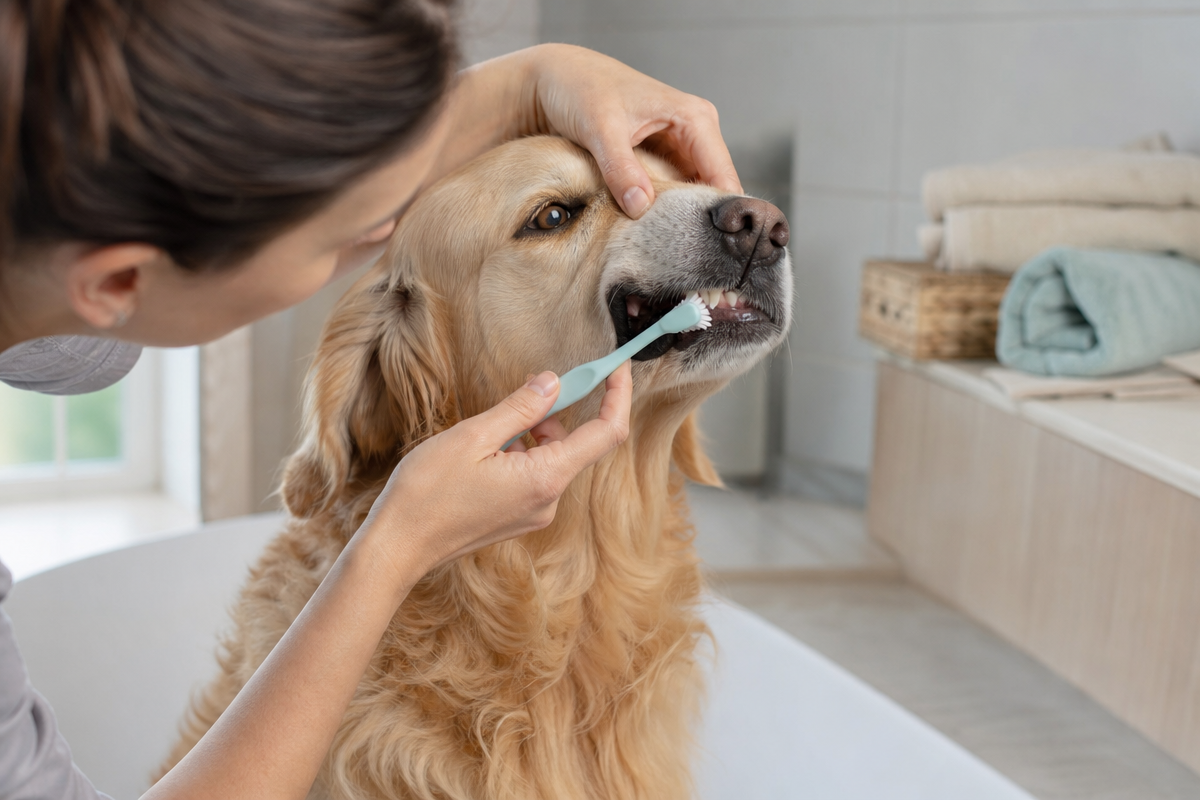
Once your dog is comfortable with that, introduce a dog-safe toothpaste on your fingertip. These come in flavours like chicken, beef and vanilla, and most dogs find them genuinely appealing. Let your dog sniff and lick the paste freely. You're building a positive association, not cleaning teeth yet.
One firm point: never use human toothpaste. Fluoride is harmful to dogs if swallowed, and xylitol (an artificial sweetener found in many whitening and sugar-free varieties) is acutely toxic, potentially causing dangerous drops in blood sugar even in small quantities. This is well established in veterinary literature and not a minor caveat.
Progressing to the Brush
When your dog is comfortable with finger contact around their mouth, run a finger along the outside of the gumline before introducing the toothbrush. Then offer the brush with a small amount of toothpaste and let your dog lick it. No pressure.
Begin brushing the front teeth using small, gentle circular motions. Work gradually towards the canines, then back to the molars over several sessions. Keep each session short, ideally under two minutes, and always finish on a positive note.
Most dogs can tolerate a full routine within two to four weeks with consistent, patient training. For anxious or reactive dogs, this timeline may be considerably longer. There's no universal schedule, and pushing too fast can set you back further than going slowly.
Frequency and Technique
Daily brushing is the gold standard, as recommended by both the PDSA and Blue Cross. Three times a week is a workable minimum if daily isn't achievable, but it should be a floor rather than a goal. The bacteria that cause plaque don't take days off.
Where possible, angle the brush at roughly 45 degrees to the gumline. Focus on the outer surfaces of the teeth, as the tongue naturally keeps the inner surfaces cleaner and plaque tends to accumulate less there. It's a small but useful detail that most brushing guides don't mention.
One important caveat: if your dog already has heavy tartar build-up, brushing at home won't remove it. Tartar is mineralised and hard. Your vet needs to scale it off first under anaesthetic before home brushing becomes fully effective.
Supporting Dental Health Beyond Brushing
Dental Chews for Dogs
Dental chews work through mechanical abrasion, meaning the chewing action physically scrubs the tooth surface as your dog works through them. They can meaningfully reduce plaque, but they supplement brushing rather than replace it.
A practical quality filter that most product guides overlook: look for the VOHC seal. The Veterinary Oral Health Council independently evaluates dental products and awards its seal only to those with evidence of efficacy. It's a straightforward way to separate products with genuine data behind them from those relying on marketing claims alone.
A few practical points worth keeping in mind:
- Always choose the correct size for your dog. A chew that's too small becomes a choking hazard.
- Dental chews carry calories. Adjust your dog's main meals to account for them, particularly for smaller dogs where treat calories can add up quickly.
- Hard chews, including raw bones, antlers and hard nylon toys, carry a real risk of slab fractures, where a chunk of the tooth shears off. This is a common and often costly injury that tends to get underplayed in dental product marketing. If you can't indent the chew with your thumbnail, it's probably too hard.
Dental Diets and Water Additives
Specially formulated dental diets, such as Hill's Prescription Diet t/d or Royal Canin Dental, use larger kibble pieces with a specific texture designed to clean tooth surfaces as the dog chews through them. They're not an everyday food for most dogs, but they can be a useful tool, particularly for dogs who flatly refuse brushing.
Water additives and oral rinses can also contribute to oral hygiene. The evidence for these varies between products, so checking for the VOHC seal is a useful guide here too. They're unlikely to replace brushing but may help as part of a broader routine.
Rawhide chews divide opinion. Some dogs enjoy them and they do encourage chewing. The concerns, which are legitimate, relate to choking risk if large pieces are swallowed, and potential bacterial contamination in some products. If you use them, supervise your dog and remove any softened pieces that could be swallowed whole.
What Doesn't Work as Well as Owners Hope
It's worth addressing some common assumptions directly. Dental treats alone, even good ones, cannot replicate the systematic coverage that brushing achieves across all tooth surfaces.
"Natural" chews aren't automatically safer than commercial products. Some carry higher choking or fracture risks than well-designed commercial alternatives. And popular products like Greenies-style chews, while helpful as part of a routine, are not a replacement for brushing.
How Vet Dental Check-Ups Fit In
A dental assessment as part of your dog's annual health exam is good baseline practice. Your vet can identify early signs of disease that aren't yet visible or symptomatic at home. How often professional cleaning is needed beyond that depends on the individual dog.
Professional scaling and polishing is carried out under general anaesthetic. This lets vets clean below the gumline safely and thoroughly, and assess or treat individual teeth that need attention. It's not something that can be replicated without anaesthesia, regardless of what some providers claim.
This brings up an important safety point. Anaesthesia-free dental scaling, offered by some groomers and mobile pet services, is not recommended by veterinary professional bodies including the British Veterinary Dental Association (BVDA). Without anaesthesia, a thorough examination below the gumline isn't possible, the dog can't be kept still safely, and the procedure may do more harm than good by pushing bacteria further into already compromised gum tissue. It may look like dental cleaning, but it isn't.
Professional dental cleaning in the UK varies considerably in cost depending on the practice, location and the extent of treatment required. It often includes pre-anaesthetic blood tests, anaesthetic monitoring and any extractions needed, all of which affect the final figure. If cost is a concern, it's worth discussing payment plans or pet insurance cover with your vet before the need becomes urgent.
Puppies, Adults and Senior Dogs: Tailoring Your Approach
Puppies
The puppy stage is the ideal window to establish dental habits. Even though baby teeth (deciduous teeth) will fall out between roughly three and six months, getting a puppy comfortable with mouth handling early makes everything easier later. The tolerance you build now carries forward. If you're still finding your feet with a new arrival, our new puppy advice for UK owners covers the wider first steps.
One thing to watch for in puppies, particularly small breeds: retained deciduous teeth. Sometimes a baby tooth doesn't fall out when the adult tooth comes through, leading to crowding and abnormal positioning. This is a common vet referral issue and is worth raising at your puppy's health checks if you notice any teeth that seem crowded or doubled.
Adult Dogs
For adult dogs, consistency is the main objective. A regular brushing routine combined with annual vet dental assessments is the foundation of good oral health.
It's also worth knowing whether your dog is in a higher-risk category. Small breeds such as Yorkshire Terriers and Chihuahuas, and brachycephalic breeds including Pugs, French Bulldogs and English Bulldogs, are significantly more prone to dental disease. Their teeth are often crowded into a smaller jaw, creating tighter spaces where plaque accumulates faster and is harder to remove. If your dog is one of these breeds, more frequent dental attention, both at home and at the vet, is genuinely warranted.
Senior Dogs
Older dogs are more likely to already have some degree of dental disease, so the starting point is a vet assessment rather than jumping straight into a brushing routine. Your vet can advise whether a professional clean is needed first and whether any teeth are causing pain.
Brushing technique may need to be gentler with older dogs, particularly those with sensitive or receding gums. And if professional cleaning is recommended, anaesthetic risk in older dogs is a valid concern to discuss with your vet. It doesn't automatically rule out treatment, but it does inform how your vet approaches it. Dental health is one piece of a bigger picture here; our guide to keeping your older dog healthy at home covers the rest.
Dog Dental Care During Boarding Stays
A boarding stay shouldn't mean a dental routine goes out of the window. For dogs on a daily brushing schedule, even a week without it allows plaque to accumulate and undo some of your progress.
Before your dog stays at a boarding hotel, share their routine with the staff. Bring your dog's toothbrush and their specific toothpaste, and write down when and how you do it. A good boarding provider will be willing to follow established health routines, and it's a reasonable question to ask when you're researching options. It's easy to fold into the rest of your prep, and our what to pack for dog boarding checklist is a handy starting point.
If your dog has dental chews as part of their daily routine, make sure the boarding team knows about them and understands they count towards the day's calorie allowance. Providing them separately from food with clear instructions reduces the chance of your dog being overfed.
You can search and compare boarding hotels near you on Tailstays, and use the enquiry stage as an opportunity to ask how each hotel handles individual pet health routines.
Frequently Asked Questions
Can I use human toothpaste on my dog?
No. Human toothpaste should never be used on dogs. Fluoride is harmful to dogs if swallowed, and many toothpastes, particularly whitening or sugar-free varieties, contain xylitol, an artificial sweetener that's acutely toxic to dogs and can cause a dangerous drop in blood sugar even in small amounts. Use only toothpaste formulated specifically for dogs.
My dog won't let me brush their teeth. What else can I do?
First, go back to basics. Gradual desensitisation over several weeks works for most dogs if you're patient. In the meantime, VOHC-approved dental chews, a veterinary dental diet or a water additive can all help reduce plaque. None of these fully replaces brushing, but they're better than nothing while you work on building tolerance. Your vet can also advise on approaches suited to your dog's temperament.
How often should dogs have a professional dental clean?
This varies by individual dog. A dental assessment as part of an annual health check gives your vet the information to advise you. Some dogs may need professional cleaning every year or two; others with excellent home care and low plaque accumulation may need it less often. There's no single universal answer, which is why regular vet checks matter.
What is anaesthesia-free dental cleaning and is it safe?
Anaesthesia-free dental scaling is offered by some groomers and mobile pet services as an alternative to veterinary dental procedures. It isn't recommended by veterinary professional bodies including the British Veterinary Dental Association. Without anaesthesia, it isn't possible to safely examine or clean below the gumline, the dog can't be kept adequately still, and the procedure may drive bacteria deeper into compromised gum tissue. The appearance of clean teeth afterwards can create a false sense of security while underlying disease continues. For genuine dental treatment, a veterinary practice with anaesthetic monitoring is the only appropriate setting.
Are dental chews enough on their own?
No. Dental chews can meaningfully reduce plaque build-up, but the coverage and consistency of brushing can't be replicated by chewing alone. Think of dental chews as a useful addition to your routine, not a replacement for it. See the dental chews section above for guidance on choosing effective products.
My dog has bad breath. Is this normal?
Mild mouth odour after eating isn't unusual, but persistent or strong bad breath isn't something to accept as normal. It's often an early sign of bacterial activity in the mouth, which may indicate gingivitis or periodontal disease. In some cases it can also signal digestive or systemic issues. A vet check is the right next step rather than reaching for a dental spray to mask the smell.
Which dog breeds are most prone to dental disease?
Small breeds, including Yorkshire Terriers, Chihuahuas and Dachshunds, are at higher risk because their teeth are often crowded into a proportionally smaller jaw. Brachycephalic breeds, such as Pugs, French Bulldogs and English Bulldogs, face similar issues due to the compressed facial structure. If your dog is one of these breeds, it's worth being particularly diligent about home dental care and raising dental health with your vet at every check-up.
At what age should I start brushing my dog's teeth?
As early as possible. The puppy stage, before eight months, is the ideal time to introduce mouth handling and start building tolerance for brushing. Even though baby teeth will be replaced, establishing the habit early makes adult dental care significantly easier. If you have an older dog who has never had their teeth brushed, it's not too late, but start with a vet assessment first, particularly if you suspect any disease is already present.