
If you've dug out your old pet passport ready for a holiday in Europe, there's an important update you need to know. GB-issued pet passports have not been accepted for EU travel since 1 January 2021. If you want to take your dog, cat, or ferret from Great Britain to the EU, you now need an Animal Health Certificate (AHC) for every single trip. That's the reality of the pet passport UK situation after Brexit.
The good news is that the process is manageable once you understand the steps. There's also some longer-term relief on the horizon: the UK government announced plans in May 2025 to reintroduce pet passports, with a timeline of around 2027 being cited. That won't help you if you're travelling this year, though, so let's start with what you actually need right now.
Key Takeaways
- GB-issued pet passports are no longer valid for travel to the EU. They cannot be updated or reactivated.
- Dogs, cats, and ferrets from Great Britain now need an Animal Health Certificate (AHC) for every EU trip.
- An AHC must be issued by an Official Veterinarian within 10 days of entering the EU. It cannot be arranged months in advance.
- Your pet must be microchipped before (or at the same time as) their rabies vaccination. If the microchip goes in after the vaccine, the vaccination must be repeated.
- First-time rabies vaccinations require a 21-day wait before the AHC can be issued. A valid booster has no waiting period.
- A second AHC, issued by an EU-based Official Veterinarian, is needed for the return journey to the UK. This surprises many owners and adds cost.
- Northern Ireland passport rules differ from Great Britain, so contact your vet before assuming your passport is or isn't valid.
- The UK government intends to reintroduce pet passports around 2027, but no official date has been confirmed.
Why Your GB Pet Passport No Longer Works, and What You Need Instead
GB-issued pet passports have not been recognised for entry into EU member states since 1 January 2021. There is no way to simply take your old passport to a vet and have it updated or reinstated for EU use. The document itself is no longer an accepted format. This isn't an administrative problem that can be fixed with a stamp.
What most UK owners need instead is an Animal Health Certificate, a different document entirely. The term "pet passport" is still widely used informally as shorthand for pet travel documentation, which causes real confusion. In practice, the AHC is what replaces it for Great Britain.
There is one important distinction worth knowing. Pet passports issued in Northern Ireland, Gibraltar, and certain listed non-EU countries (including Norway, Switzerland, Iceland, and Monaco) may still be valid for EU travel. If your passport was issued in any of these places, check with your vet before assuming it is or isn't accepted. The rules are nuanced and the consequences of getting it wrong at a border are significant. For Northern Ireland specifically, gov.uk advises pet owners to contact their vet for advice before travelling.
One situation catches some frequent travellers off guard: the loophole that previously allowed Great Britain residents to use EU-issued pet passports for EU entry has now been closed. The British Veterinary Association has covered this development. If you obtained an EU-issued passport while living abroad or through a vet in an EU country, don't assume it remains valid without checking its current status.
What UK Pet Owners Actually Need to Travel to the EU Today
The Animal Health Certificate is the replacement for the pet passport for Great Britain. It covers dogs, cats, and ferrets, the same species the old passport system applied to. The key difference is that an AHC is a single-use document, valid for one trip only. Here is how to get one.
Make Sure Your Pet Is Microchipped
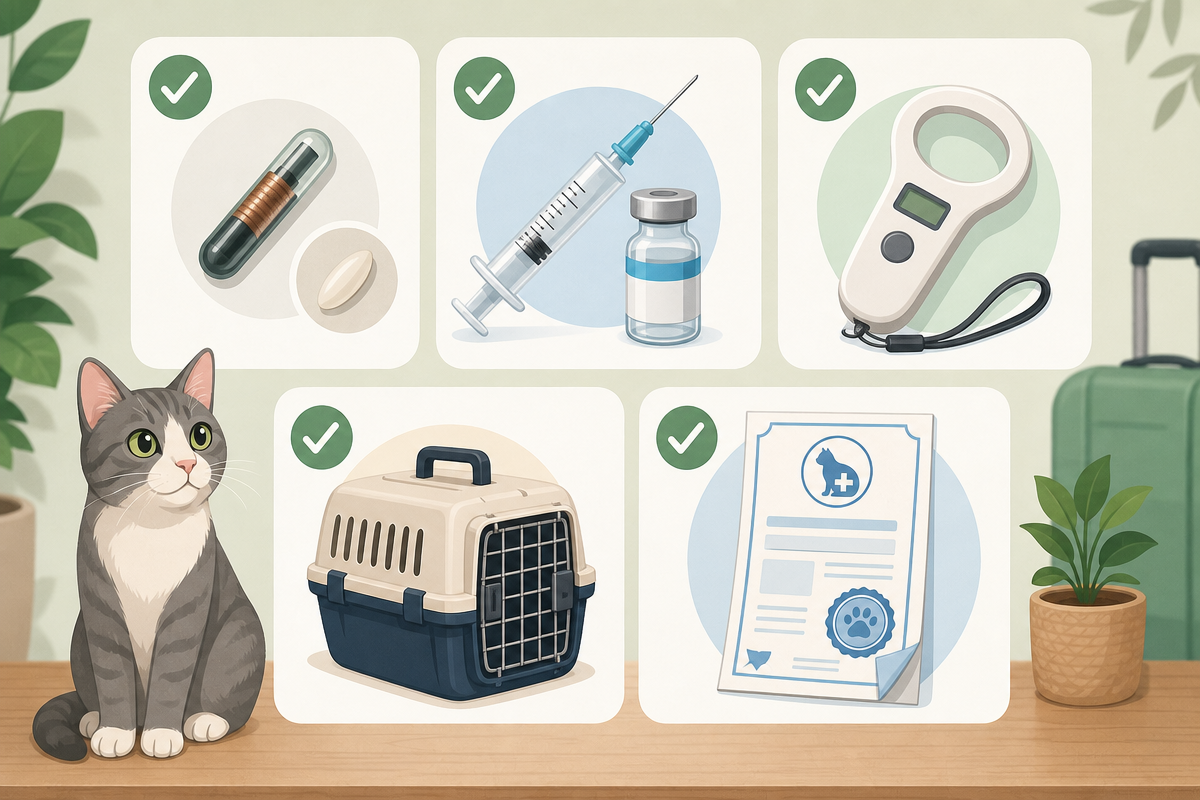
Your pet must have an ISO 11784/11785 compliant microchip. This is the standard used across the EU and is the baseline identification requirement. If your pet isn't already chipped, the cost is typically around £10 to £30, though prices vary between practices.
The sequencing matters more than many owners realise. The microchip must be implanted before the rabies vaccination is given, or at the very same appointment with the microchip confirmed first. If the vaccination was administered before the microchip, it is considered invalid for travel purposes and must be repeated. This is one of the most common and costly mistakes owners make.
Get a Valid Rabies Vaccination
A rabies vaccination is required for all dogs, cats, and ferrets travelling from Great Britain to the EU. If your pet has never been vaccinated against rabies, or if their previous vaccination has lapsed, they will need a primary vaccination, and then you must wait a full 21 days before the AHC can be issued. Plan well ahead; many owners underestimate this timeline.
The wait only applies to a first-time or lapsed vaccination. If your pet's booster was given before the previous vaccine expired, there is no waiting period at all. This exception is inconsistently explained by many sources, so it is worth confirming your specific situation with your vet. If you're due a booster anyway, our dog vaccination schedule guide and cat vaccination schedule guide cover the wider picture.
Not all rabies vaccines have the same validity period. Most commonly used UK vaccines such as Nobivac and Canigen are licensed for three years, but some, including Rabisin, are only valid for one year. Your AHC will reflect whichever expiry date applies to your pet's specific vaccine, so confirm this with your vet. The cost of a rabies vaccination is typically around £40 to £70, though this varies by practice.
Book an Official Veterinarian to Issue the AHC
An AHC cannot be issued by just any vet. It must be completed by an Official Veterinarian, a vet who holds additional authorisation from DEFRA. Not every practice has an OV on staff, so you may need to seek out a specialist service rather than simply calling your regular vet.
Critically, the AHC must be issued within 10 days of your pet entering the EU. This means it cannot be arranged months in advance and filed away. If you book an OV appointment too early, the certificate will not be valid by the time you travel. Work backwards from your departure date and arrange the appointment accordingly.
Once issued, the AHC is valid for onward travel within the EU for up to four months from the date of issue, or until the rabies vaccination expires, whichever comes first. So if you're spending an extended period in Europe, the certificate itself won't expire immediately after arrival.
AHC issuance at a vet practice typically costs in the range of £100 to £200, though prices vary. Home-visit services also exist for owners who prefer not to take a nervous pet into a clinic. The Pet Passport Co. and PassPets are two specialist OV services worth considering if your regular vet doesn't have an OV available. Check their websites directly for current pricing, as fees may change.
Check Destination-Specific Requirements
For dogs (not cats or ferrets) travelling to Ireland, Finland, Malta, or Norway, there is an additional requirement: a tapeworm treatment must be administered by a vet between 24 and 120 hours before arrival in those countries. This needs to be recorded in your AHC.
The rules around dogs returning from those same countries are detailed and specific. Rather than relying on any summary, including commercial providers' websites, check the current APHA and DEFRA guidance for your exact route before travel. The details matter and they do change.
Other countries may have additional requirements beyond the standard AHC. Always verify the specific entry rules for your destination through official APHA guidance before you travel.
How Much Does It Cost to Travel with a Pet from the UK?
The costs add up faster than many owners expect, particularly for a first trip. Here is a realistic breakdown for a dog travelling to the EU for the first time. All figures are approximate and vary by practice and location, so check directly with your vet or chosen OV service for current pricing:
| Item | Approximate Cost | Notes |
|---|---|---|
| Microchip (if needed) | £10 to £30 | One-off cost; already done for most dogs |
| Rabies vaccination | £40 to £70 | Required; boosters needed every 1 to 3 years depending on vaccine |
| AHC issuance | £99 to £200 | Specialist providers may be cheaper than your local vet |
| Tapeworm treatment (dogs only, selected countries) | £20 to £40 | Only required for Ireland, Finland, Malta, Norway |
| Estimated total (first trip) | £150 to £340+ | Varies significantly by practice and location |
For cats, costs are typically slightly lower, as tapeworm treatment isn't required for any EU destination. If you're travelling with a cat, our complete guide to travelling with cats covers the practical side of the journey itself.
One cost that many owners completely overlook is the return journey. To bring your pet back into the UK from the EU, you need a second AHC, this time issued by an EU-based Official Veterinarian. Finding an OV abroad, understanding their fees, and ensuring the paperwork is correctly completed adds both complexity and cost that isn't always foregrounded by travel articles. Budget for it before you go.
One figure you may encounter elsewhere is worth flagging: some sources list a rabies titer test as an additional cost for returning to the UK from the EU. This is not a standard requirement for pets re-entering the UK from EU countries. Rabies titer tests apply in specific non-EU contexts, such as travel from countries not listed as having equivalent disease controls. Don't budget for one as a routine return-trip expense unless your specific route genuinely requires it.
It's also worth checking whether your pet travel insurance covers overseas trips, as standard UK policies often don't.
UK Pet Passports Are Being Reintroduced: What We Know So Far
There is genuine reason for optimism, though the timeline requires patience. Following new UK-EU trade discussions, the UK government announced in May 2025 its intention to reintroduce a pet passport system. A timeline of around 2027 has been widely cited, though this has not been officially confirmed by the government at the time of writing.
Based on what has been indicated so far, the new UK pet passport is expected to work along these lines:
- It will be a multi-use document, unlike the single-use AHC.
- Validity will be tied to the rabies vaccination, meaning up to three years for most UK vaccines.
- A microchip and current rabies vaccination will still be required.
- Only Official Veterinarians will be able to issue them.
- Acceptance is expected across EU member states, Switzerland, and Norway.
What the new passport will not do: replace AHCs for commercial pet transport, cover non-EU destinations, or apply to species other than dogs, cats, and ferrets.
If you still have a pre-2021 GB pet passport at the back of a drawer, it is very unlikely to become valid again. The expectation is that a new passport will need to be issued through the new system rather than old documents being reinstated. Don't hold onto yours in the hope that it can simply be reactivated.
The details and exact launch date remain unconfirmed. Monitor APHA and DEFRA for official updates as 2027 approaches, and be cautious of any source, including commercial providers, presenting the timeline as certain.
Special Cases and Common Mistakes to Avoid
Northern Ireland Rules Are Different
Pet passports issued in Northern Ireland operate under different rules to those issued in Great Britain. They may still be valid for EU travel, but the specifics depend on the details of the individual passport. Gov.uk advises owners with Northern Ireland-issued passports to contact their vet before travelling rather than assuming the document is or isn't accepted. This is not an area where it's safe to guess.
Travelling to Non-EU Countries
The AHC system, and the future UK pet passport, specifically covers EU travel. If you're taking your pet to the United States, Canada, Australia, or other non-EU destinations, the requirements are entirely different and vary significantly by country. Some destinations require lengthy advance preparation, quarantine periods, or documentation that can take months to arrange. Always check with APHA and the destination country's official veterinary authority well before your usual travel planning timeline.
Red Flags and Common Mistakes
These are the errors that cause real problems at borders or vet appointments. Go through this list before you start the process:
- Booking the AHC too early. The certificate must be issued within 10 days of entering the EU. An AHC sorted six weeks before travel will not be valid.
- Microchip after vaccination. If your pet was vaccinated before being microchipped, the vaccination is invalid for travel purposes. It must be repeated after the chip is confirmed.
- Assuming your regular vet can issue an AHC. Only Official Veterinarians with DEFRA authorisation can do this. Check before you book.
- Relying on an old GB pet passport. It will not be accepted at an EU border regardless of what it contains.
- Skipping destination-specific checks. Ireland-bound dogs need tapeworm treatment. Other countries may have requirements you haven't anticipated.
- Forgetting the return AHC. As noted in the costs section above, you need a second certificate issued by an EU-based OV to bring your pet back into the UK. Arrange this before you leave, not when you're trying to come home.
What Happens to Your Pet While You're Abroad?
Not every trip is a good fit for bringing a pet along. The paperwork, the stress of travel, and the logistics of keeping animals comfortable across borders lead many owners to make a different call: leaving their pet in professional care at home. If your cat is likely to find the journey stressful, that's often the kinder option, and our guide on why cats get stressed at the cattery may help you weigh it up.
If that sounds more sensible for your situation, it's worth finding a trusted boarding option before you finalise your travel plans. Tailstays lists pet hotels and boarding facilities across the UK, with options in over 2,700 locations, so you can find somewhere your pet will be well looked after while you're away. Search for boarding near you and compare what's available before you go.
Frequently Asked Questions
Can I still use my old UK pet passport?
If it was issued in Great Britain (England, Wales, or Scotland), no. GB-issued pet passports are no longer accepted for EU travel and cannot be updated or reactivated. If yours was issued in Northern Ireland, contact your vet before travelling. The rules are different and depend on the specific details of your passport.
How long is an Animal Health Certificate valid for?
An AHC must be issued within 10 days of your pet entering the EU, so it cannot be arranged far in advance. After entry, it is valid for onward travel within the EU for up to four months from the date of issue, or until the rabies vaccination expires, whichever is sooner.
Does my pet need a new AHC every time we travel to the EU?
Yes. An AHC is a single-use document, valid for one trip only. A new one must be issued by an Official Veterinarian for each separate trip, including the return journey to the UK, which requires an AHC issued by an EU-based OV.
What is the 21-day rule for pet travel?
If your pet is receiving a rabies vaccination for the first time, or if a previous vaccination has lapsed, you must wait at least 21 full days after the vaccination before the AHC can be issued. There is no waiting period if the vaccination is a valid booster given before the previous vaccine expired. Confirm your pet's vaccination status with your vet before making travel plans.
Which vets can issue an Animal Health Certificate?
Only Official Veterinarians, vets who hold additional DEFRA authorisation, can issue AHCs. Not every practice has one on staff. If your regular vet cannot help, specialist OV services such as The Pet Passport Co. and PassPets offer appointments, including home visits in some areas.
Do cats need tapeworm treatment for EU travel?
No. Tapeworm treatment is only required for dogs, and only when travelling to specific countries: Ireland, Finland, Malta, and Norway. It must be administered by a vet between 24 and 120 hours before arrival. Cats have no equivalent requirement for any EU destination.
When will the new UK pet passport be available?
The UK government announced its intention to reintroduce pet passports in May 2025. A timeline of around 2027 has been widely cited, but no official date has been confirmed. Monitor APHA and DEFRA for updates, and plan using the AHC system for any travel in the meantime.