
Key Takeaways
- Bringing your pet isn't always the kindest choice. Anxious, elderly, or unwell animals may genuinely be happier at a professional pet hotel.
- 'Pet friendly' accommodation doesn't mean your pet is welcome everywhere on the property. Always read the small print before booking.
- Pets must be suitably restrained in vehicles under Highway Code Rule 57. This applies across Great Britain.
- Seasonal hazards such as blue-green algae, adders, and beach access bans can catch holidaying pet owners off guard. Research your destination before you arrive.
- Book early. Pet-friendly rooms and cottages are genuinely limited, and the best options go quickly, especially during school holidays.
A UK holiday with your pet can be brilliant. Fresh air, coastal walks, a cottage with a garden. It can also be unexpectedly stressful if you haven't thought through the details in advance. This guide to pet friendly holidays walks you through every stage, from deciding whether to bring your pet at all, to keeping them safe once you arrive.
The single biggest factor in whether a trip goes smoothly? Honest planning before you book anything. So that's where we'll start.
Should You Bring Your Pet or Leave Them Behind?
This is the question most pet owners skip straight past, and it's the most important one you'll ask. Not every pet will enjoy travelling, and not every holiday is improved by bringing an animal along.
Is Your Pet Actually Suited to Travelling?
Some dogs take to road trips immediately. They curl up on the back seat, doze through service stations, and bounce out at the destination ready for anything. Others find the whole experience deeply unsettling. You probably know which category yours falls into.
Signs a dog or cat travels reasonably well include settling quickly in a moving vehicle, eating and drinking normally on journeys, and showing no prolonged distress on arrival somewhere new. The warning signs point the other way: excessive panting, drooling, or vomiting in the car; persistent vocalisation; destructive or hiding behaviour on arrival; and refusing food for extended periods in an unfamiliar environment.
Age and health matter too. A fit, sociable three-year-old Labrador and a 13-year-old arthritic spaniel are not having the same holiday, even if you take them to the same place. For pets with health conditions, or older animals generally, it's worth a quick conversation with your vet before you commit to anything. Our guide to senior dog care is a useful starting point if you're weighing up a trip with an older dog.
Questions to Honestly Ask Yourself
Will your pet enjoy this trip, or will they simply endure it because they're with you? The answer matters more than you might think.
Consider whether your accommodation genuinely suits them. A hotel corridor, a narrowboat, or a shared campsite is a very different environment from home. Consider whether the activities you've planned are actually pet-friendly in practice, not just in theory. And consider whether you'll spend a meaningful chunk of the holiday managing their anxiety rather than enjoying the break yourself.
None of this means you shouldn't bring them. It means the decision deserves honest thought rather than a default assumption that along is always better.
The Alternative: Professional Pet Hotels as a Positive Choice
For anxious, elderly, or easily overwhelmed pets, a professional pet hotel isn't a compromise. It's often the better choice. A familiar routine, knowledgeable carers, and a calm environment can mean your pet has a genuinely relaxing week while you do the same. If separation anxiety is your worry, it's worth reading how to make boarding work for an anxious dog before you rule it out.
If you're weighing up the options, it's worth checking what's available near you before you decide. Based on listings in our directory, Tailstays features 2,708 pet hotels across the UK, with strong coverage in cities including London, Leeds, York, Bristol, and Liverpool, as well as many smaller towns and rural areas. Browsing local options early gives you a realistic picture of what professional care looks like before you commit either way. If you want to dig deeper into the trade-offs, our piece on whether to bring them or book a pet hotel covers the decision in full.
Finding Genuinely Pet-Friendly Accommodation in the UK
Finding somewhere that describes itself as pet friendly is easy. Finding somewhere that's genuinely set up for your specific pet, in a location that works for your trip, takes more effort. Start earlier than you think you need to.
What 'Pet Friendly' Actually Means (and What It Doesn't)
The phrase 'pet friendly' has no standard definition in UK hospitality. It can mean your dog is welcome in your room and the bar. It can also mean one small dog is tolerated in a ground-floor room, on a non-refundable deposit, and must not be left unattended under any circumstances.
Pet supplements are common and typically range from around £10 to £30 per night, though some premium properties charge considerably more. Weight and breed restrictions are also widespread, particularly for larger or so-called 'restricted' breeds. Always confirm both before you book, not after.
Watch out for vague wording in listings. Phrases like 'pets considered' or 'well-behaved pets may be welcome' signal that permission isn't guaranteed. Look for listings that state their pet policy explicitly: how many pets, what sizes, what areas of the property they can access, and whether pets can be left alone in the room.
Types of Pet-Friendly Accommodation
Self-catering cottages are the most flexible option for travelling with pets. You have your own outdoor space, there are no shared lounges to negotiate, and you can generally manage your pet's routine without disturbing other guests. They tend to have clearer pet policies too, because the whole property is yours for the week.
Hotels vary enormously. Some have dedicated dog-friendly floors with direct garden access. Others allow dogs in rooms only, with no access to restaurants or communal areas. A few welcome pets throughout and genuinely mean it. Read each property's policy as its own document rather than relying on a booking site's generic 'pet friendly' filter.
Campsites and glamping sites have grown significantly as a pet-friendly category. The appeal is obvious: outdoor space, freedom of movement, and generally more relaxed attitudes to muddy animals. Bell tents, shepherd's huts, and yurts often accommodate dogs comfortably, though check whether the specific structure you're booking has an enclosed outdoor area if your dog isn't reliable off-lead.
Narrowboats and coastal holiday lets round out the options. Both can work well for dogs, though a nervous cat on a narrowboat needs careful planning around escape risk.
Key Questions to Ask Before You Book
- Is my breed and size of pet explicitly permitted, or just 'not excluded'?
- How many pets are allowed?
- Can pets be left alone in the room or property? If so, for how long?
- Which areas of the property can pets access?
- Is there secure outdoor space nearby, or an enclosed garden?
- Are there green spaces or walking routes within easy reach?
- What is the pet supplement, and is it refundable?
If you're still torn between bringing your pet and booking them into professional care, browse pet hotels in your area on Tailstays. Coverage spans cities and smaller towns across the UK, so there's likely something close to home.
Planning the Journey
The journey itself deserves as much planning as the destination. A stressful travel day can set the tone for the whole trip, for your pet especially.
Road Trips With Pets
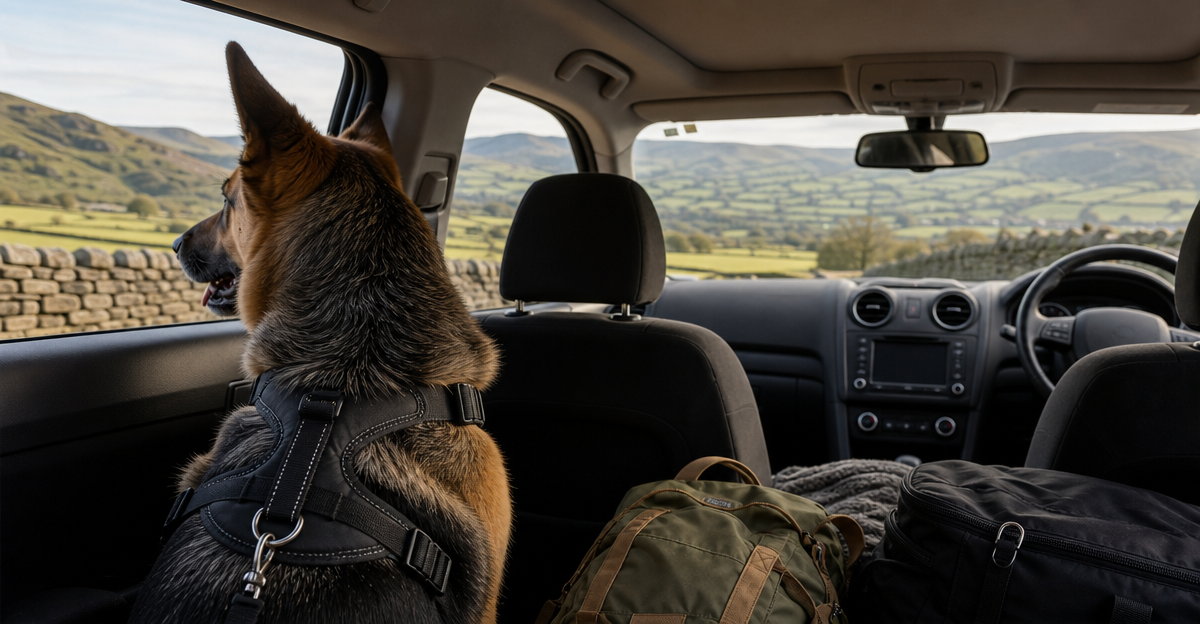
Under Highway Code Rule 57, drivers in Great Britain must ensure animals are suitably restrained in a vehicle so they cannot distract the driver or injure themselves or others in an emergency stop. This is a legal requirement, not a preference. A boot guard, a crash-tested crate, or a well-fitted harness attached to a seatbelt are the practical solutions most owners use. For the full picture, including the equipment worth investing in, see our guide to dog car safety and UK law.
The PDSA recommends stopping every two hours on long journeys to give dogs a chance to stretch, drink water, and relieve themselves. Plan your route around this rather than treating it as an inconvenience. Service stations with grassed areas, or a quick detour to a lay-by with space to walk, make a real difference to how your dog arrives at the destination.
If your pet suffers from travel sickness, don't rely on home remedies or advice from the internet. A vet can prescribe effective anti-nausea medication that's appropriate for your specific animal. It's worth asking well before your departure date so you have time to trial it if needed.
Travelling with a cat brings its own challenges, from carrier choice to keeping them calm on longer drives. Our complete guide to travelling with cats covers the details.
What to Pack for Your Pet
- Enough food for the trip, plus extra in case of delays or dietary upsets
- Fresh water and a portable bowl for journey stops
- Their usual bedding or a blanket from home
- Leads, harness, and a long line if you're visiting open countryside
- Waste bags, a poop scoop, and any cleaning supplies
- Vaccination records, including kennel cough if your pet is being boarded at any point
- Microchip details and a recent photo (useful if they go missing)
- Up-to-date flea and tick treatment, particularly for countryside or moorland destinations
- Any prescription medication, with enough for the full trip
Trains and Public Transport
UK rail travel with dogs is more accommodating than many people realise, but the rules aren't uniform. Most train operating companies allow dogs to travel free of charge, though there are limits on numbers per passenger and some peak-time restrictions. National Rail's conditions of carriage provide the baseline rules, but individual operators can set their own policies, so check directly with the operator for your specific route.
Buses are more inconsistent. Some local authority services and private operators allow dogs; many do not, or impose restrictions on size and number. Don't assume a route is pet-friendly without checking first.
UK public transport is not, as a whole, particularly designed for pet owners. For most trips with a pet in tow, a car remains the most practical option.
Flights and International Travel
Most UK domestic flights do not permit pets in the cabin. For international travel, the rules changed significantly after Brexit. If you're taking a pet from Great Britain into the EU or Northern Ireland, you'll need an Animal Health Certificate (AHC) issued by an official vet, rather than the pet passport that previously applied. DEFRA publishes current guidance on this, and it's essential reading before you book any international trip. Our explainer on what changed after Brexit breaks down exactly what you need now.
Hold travel carries real welfare and safety risks. Stress levels in the hold can be extreme, and certain breeds (particularly brachycephalic dogs such as French Bulldogs and Pugs) face additional respiratory risks in cargo environments. Many veterinary professionals advise against hold travel for pets unless it's unavoidable. If international travel is part of your plans, discuss the specifics with your vet well in advance.
Settling Your Pet In at the Destination
Arriving somewhere new is genuinely disorienting for many animals. A little preparation in the first 24 hours makes a significant difference to how the rest of the trip goes.
The First 24 Hours: Managing Anxiety and Adjustment
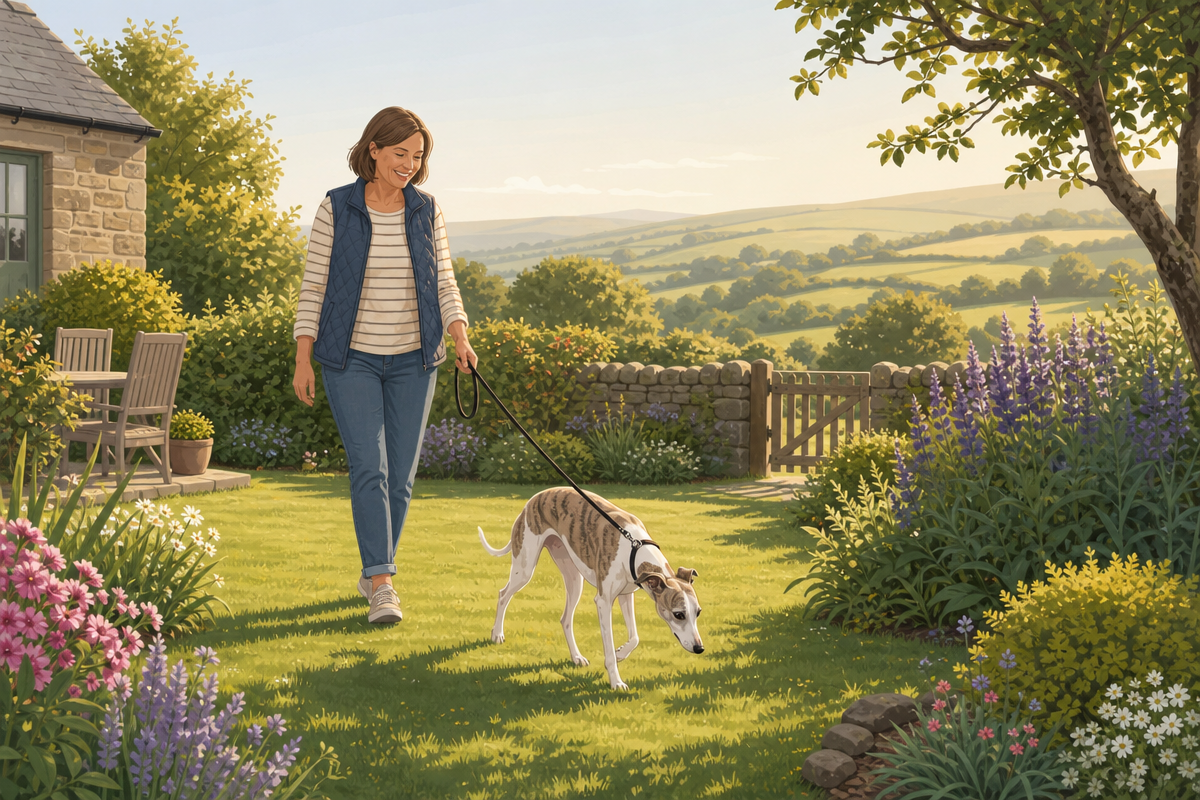
Keep your pet's routine as consistent as possible from the moment you arrive. Feed them at the usual time, walk at the usual time, and give them space to explore at their own pace rather than immediately exposing them to lots of new people or stimulation.
Set up a familiar corner early, before you unpack anything else. A blanket or bed that smells of home, a favourite toy, and access to fresh water gives anxious animals something recognisable to return to. For dogs, this small gesture often shortens the adjustment period noticeably.
Cats need extra care in holiday settings. In a hotel room, windows and doors opening onto unfamiliar territory present a genuine escape risk. Self-catering accommodation you can fully secure is a much safer option for cats than a hotel stay. If you do take a cat away, keep them indoors for at least the first day regardless of how settled they seem.
Signs Your Pet Is Stressed vs. Settling
According to Blue Cross, common stress signals in dogs include yawning repeatedly, panting when not hot, a tucked tail, flattened ears, and seeking to hide or stay very close to you. In cats, watch for dilated pupils, ears flattened to the side, low crouching, hiding, and refusing food or water. If you want to get better at reading these cues generally, our guide to reading dog body language is worth a look.
Gradual improvement over the first 24 to 48 hours is normal. If your pet shows no signs of settling after a couple of days, or if stress signals are severe (prolonged refusal to eat, extreme vocalisation, inability to rest), contact a vet. In a small number of cases, going home early is genuinely the right decision, and that's fine.
Keeping Pets Safe in Unfamiliar Places
New locations bring hazards you won't have encountered on your usual walks. Before you head out, check a few things specific to your destination.
Coastal and moorland areas carry seasonal risks. Adders are most active in spring and summer on heathland and moorland across the UK. If your dog is bitten, the RSPCA advises keeping them as calm as possible and getting to a vet immediately. Blue-green algae is present in many UK lakes and reservoirs, particularly in late summer and warm weather. It can be fatal to dogs that drink contaminated water or lick their coat after swimming. Both Blue Cross and the RSPCA publish updated guidance on these risks.
Livestock fields require careful management. Keep dogs on leads near sheep, cattle, and horses at all times, and be aware that a dog worrying livestock can be legally shot by a farmer under UK law.
Find the nearest emergency vet to your accommodation before you need one. A quick search on arrival and a note in your phone could save critical time if something goes wrong.
Dog-Friendly Beaches: What You Need to Know
Not all UK beaches allow dogs year-round. Many popular beaches impose seasonal bans, typically from Easter through to October, during peak visitor season. The specific months and affected areas vary by local council, so check directly with the local authority or the beach's management before you plan a day out. Enforcement does happen, and fines apply on some beaches. Arriving to find your dog excluded from the stretch of sand you'd planned to walk is an avoidable disappointment.
Making the Most of Pet-Friendly Activities
Once you're settled, the best pet-friendly UK holidays tend to lean into the outdoors. The country's coastal paths, national parks, and moorland are genuinely well-suited to dogs, and increasingly to other pets too. For inspiration on where to base yourself, our roundup of the best dog holiday destinations in the UK is a good place to start.
Days Out With Dogs in the UK
The National Trust allows dogs on leads in the majority of its outdoor spaces, including gardens, parks, and countryside. Some indoor properties also permit assistance dogs. Their website publishes a searchable list of which properties welcome dogs and on what terms. It's worth checking the specific property rather than assuming, as policies vary and occasionally change seasonally.
Pubs are famously variable. 'Dog friendly' can mean dogs are welcome at the bar and beside you at the table, or it can mean they're tolerated in a side room away from the food. A quick call ahead, or a glance at recent reviews mentioning dogs, will tell you what to expect. Nothing sours a lunchtime walk like finding the pub you'd planned to stop at won't let your dog through the door.
Coastal walks, moorland routes, and countryside paths form the backbone of most dog-friendly holidays in the UK. The South West Coast Path, the North York Moors, the Pembrokeshire Coast, and the Cairngorms all have extensive sections that are excellent for dogs. Research dog-friendly stretches in advance, noting where livestock grazing or ground-nesting birds may require leads.
When Your Pet Needs to Stay Behind During the Day
Some activities, restaurants, and attractions simply won't accommodate pets. If your accommodation allows pets to be left alone in the room, that's straightforward enough, but many properties don't, for understandable reasons.
Local dog walkers or pet sitters can bridge the gap for a few hours. Pet-sitting apps and platforms can connect owners with sitters in most UK areas, though it's worth booking in advance for popular holiday destinations rather than searching on the day. Some holiday parks and glamping sites have arrangements with local dog-walking services worth asking about at check-in.
Returning to base mid-day to check on your pet is often the simplest solution, particularly if your accommodation is self-catering and your itinerary allows for it. Build a mid-afternoon break into your day and treat it as part of the rhythm rather than an interruption.
Never Leave Pets in Hot Cars
The RSPCA is unambiguous on this point: a car can reach dangerously high temperatures within minutes on a warm day, even with windows cracked or the car parked in shade. Heatstroke in dogs can be fatal, and it can develop far faster than most owners expect. If your plans for any part of the day involve a destination where your dog can't come, arrange alternative care rather than leaving them in the vehicle.
This applies even on overcast days in spring. UK temperatures in a parked car can climb to unsafe levels even when the outside air feels mild.
Once you've got your activities sorted, it's worth searching local pet-friendly options in case you need cover for a day. Tailstays lists pet hotels across the UK, so you can find nearby options wherever you're staying and arrange something in advance if you know certain days will be tricky.
Frequently Asked Questions
Can I take my cat on a UK holiday?
Yes, but cats generally find travel and new environments more stressful than dogs do. Self-catering accommodation with secure doors and windows is far safer than hotel rooms, where escape risk is higher. Keep cats indoors for at least the first 24 hours in any new place. If your cat is particularly anxious or has health conditions, speak to your vet before planning any trip, and consider honestly whether staying at a professional cattery might be a kinder option.
Do I need pet insurance for a UK holiday?
You don't legally need it, but it's strongly advisable. Accidents and sudden illness can happen anywhere, and emergency vet fees in an unfamiliar area can run into hundreds or thousands of pounds. Check your existing policy covers you while travelling within the UK, including any activities planned (swimming, moorland walking, and so on). Some policies have geographic or activity restrictions that aren't obvious until you read the detail. Our guide to pet travel insurance in the UK covers what's typically included.
What breeds are typically restricted at pet-friendly accommodation?
Restrictions vary by property. Some target size (no dogs over a certain weight), others focus on breed. Dogs prohibited under the Dangerous Dogs Act 1991 (Pit Bull Terrier types, Japanese Tosa, Dogo Argentino, and Fila Brasileiro) cannot legally be kept in most circumstances. Beyond that, accommodation providers may exclude breeds they consider higher-risk or more likely to cause damage, including larger guarding or working breeds. Always confirm your specific breed is accepted before booking, not after.
Is it cheaper to take my dog on holiday or book a pet hotel?
It depends on your trip. Pet supplements at holiday accommodation add cost to every night you stay. A pet hotel, paid once for the duration, may compare favourably on longer trips, particularly once you factor in the extra planning, logistics, and restrictions that travelling with a dog involves. The more relevant question is often which option suits your dog better, with cost as a secondary consideration.
What documents do I need if travelling abroad with a pet from the UK?
Since Brexit, the pet passport is no longer valid for travel from Great Britain into the EU or Northern Ireland. You now need an Animal Health Certificate (AHC) issued by an official vet, valid for a single trip. Requirements vary by destination country, including rules around microchipping, rabies vaccination timing, and tapeworm treatment. DEFRA publishes current guidance on travelling abroad with pets, and it's essential to check this well in advance of travel, as some requirements have lead-in times of several weeks or more.