
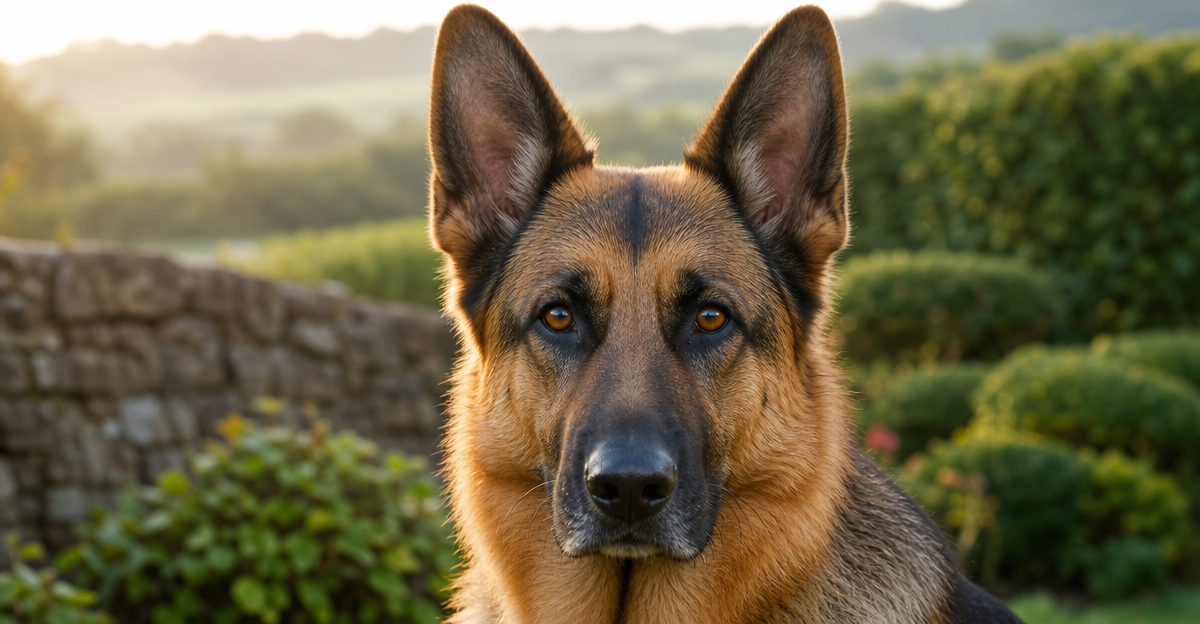
Dogs can't tell you what they're thinking, but they're communicating constantly. Through posture, facial expression, movement and vocalisation, your dog is offering you a running commentary on their inner world. The challenge is learning to read it accurately rather than through a purely human lens.
This guide draws on peer-reviewed research to give you a grounded, practical understanding of what your dog is thinking and what drives their behaviour. No overclaiming, no dismissing. Just what the science actually supports.
Key Takeaways
- Dogs have a limbic system structurally similar to ours, giving them genuine emotional lives, not just instincts.
- The "guilty look" is a response to your body language and tone, not evidence that your dog knows they did wrong.
- Tail wag direction matters: rightward wags signal positive arousal, leftward wags signal negative states.
- Yawning, lip licking and ground-sniffing during training are stress signals, not signs of boredom or defiance.
- Growling is a warning signal. Punishing it doesn't stop the underlying feeling; it removes the warning.
- Neither projecting human emotions wholesale onto dogs, nor dismissing their inner lives entirely, reflects the current scientific consensus.
What Drives Your Dog's Behaviour
Understanding why your dog does what they do starts with one grounding fact: dogs have a limbic system, the brain region associated with emotional processing, that is structurally very similar to our own. This isn't metaphor. Neuroscientist Gregory Berns at Emory University used MRI scanning on trained, unsedated dogs and found that the caudate nucleus, linked to anticipation and reward in humans, responded to familiar people and to signals of food. For many dogs, praise and social connection activated this region just as strongly as food. That's the neural substrate of genuine emotional experience.
Two common misreadings follow from not knowing this. First, the "guilty look": that averted gaze, flattened ears and crouched posture your dog offers when you come home to a chewed sofa is almost certainly not guilt. Cognitive scientist Alexandra Horowitz found that dogs displayed this body language in response to an owner's disapproving tone, not in response to having done something wrong. Dogs that hadn't eaten a forbidden treat but whose owners believed they had showed just as much of the "guilty look" as dogs that actually had. What you're seeing is appeasement behaviour: your dog reading your emotional state and trying to reduce tension. Socially sophisticated, but not moral guilt.
Second, the question of attachment. Research by Miho Nagasawa and colleagues found that mutual gaze between dogs and their owners triggered a rise in oxytocin in both species, the same bonding mechanism observed between human parents and infants. Dogs form deep, neurochemically real attachments to their people. What they don't do is plan revenge, feel moral guilt or understand abstract rules. Holding both of those things at once is the foundation of accurate dog reading.
Reading What Your Dog Is Telling You Right Now
Body language is your dog's primary language. Vocalisation adds colour, but posture, movement and facial expression carry the core message. Here's how to decode the most important signals.
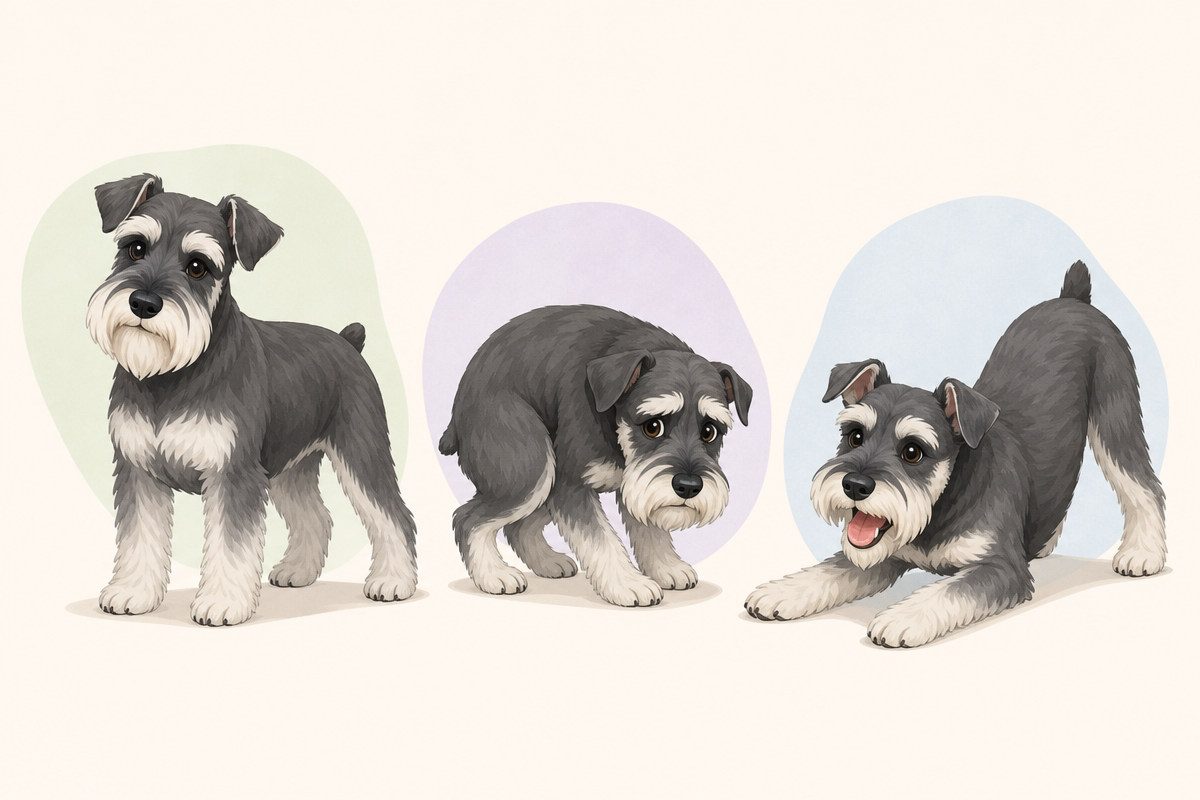
Tail position and movement
Most people know a wagging tail signals something positive. Fewer know that the direction of the wag matters. Research by Giorgio Vallortigara and Angelo Quaranta found that dogs wag with a rightward bias when seeing their owner or something they find appealing, and a leftward bias in response to something threatening or anxiety-inducing. This reflects the brain's hemispheric asymmetry. You probably can't clock this in real time without slow-motion video, but it's a useful reminder that not all wags are equal.
Beyond direction, height and stiffness tell you a great deal. A high, stiff, slow tail signals alertness or tension, not friendliness. A tail held low or tucked indicates fear or submission. A loose, mid-height wag that involves the whole rear end is your clearest sign of relaxed, positive arousal.
Ear position
Forward-pricked ears signal engagement and alertness. Ears flattened back against the head usually indicate fear, appeasement or submission. If you have a floppy-eared breed, these signals are harder to read but not absent: look for slight changes in ear base position and direction. Context matters enormously here. A dog with ears back during a greeting is communicating something very different from one with ears back during a loud firework display.
Eye signals
Soft, slightly squinted eyes with relaxed facial muscles signal contentment and trust. A hard, fixed stare with a rigid body is a warning. Then there's whale eye: when you can see the whites of your dog's eyes in a wide crescent, that's a reliable stress signal. It often appears when a dog is uncomfortable with proximity or handling but feels unable to move away.
Slow blinking, by contrast, tends to indicate relaxation. If your dog blinks slowly at you during a calm moment, that's about as close to a canine sigh of contentment as you'll get.
Mouth and facial tension
A relaxed, slightly open mouth with a loose tongue is a good sign. Tight, closed lips, especially paired with a furrowed brow, signal tension or discomfort. Lip licking, when your dog isn't near food, is something else entirely. So is yawning in a context that doesn't involve tiredness, and turning the head away mid-interaction. These are calming signals: communicative behaviours dogs use to reduce tension in themselves or others, and they're worth taking seriously when you notice them.
Body posture
The play bow (front legs extended, rear end up) is one of the clearest signals in canine communication: an unambiguous invitation to play. Weight shifted forward signals confidence or assertiveness. Weight shifted back, with a lowered head, signals uncertainty or discomfort.
Rolling over is trickier than it looks. It can be an invitation to scratch a belly, but animal behaviour science notes it can also be an appeasement gesture: your dog trying to reduce social tension rather than genuinely seeking contact. If your dog rolls over but the body is tense, ears are flat and they immediately get up again when you reach out, they probably weren't asking for a rub.
Vocalisation
Barks, whines and growls are all highly context-dependent. A bark at the postman is different from a bark during play. A whine at the door is different from a whine during separation. Growling is probably the most misunderstood signal of all. It is a warning, and a valuable one. Dogs that are punished for growling don't stop feeling uncomfortable; they stop warning you before they snap. If your dog growls, treat it as useful information about their threshold, not as defiance to be corrected.
Common Situations and What Your Dog Is Actually Thinking
When you come home
The ecstatic greeting when you return from work is real. The emotional response is genuine. But the narrative that your dog has spent the entire day pining for you specifically is one to hold carefully. Dogs' perception of time differs from ours: the research on this suggests they can distinguish short versus long absences, but the hours-long countdown your human imagination might construct probably doesn't map onto their experience. The reunion joy is authentic. The separation narrative may be more yours than theirs. If your dog genuinely struggles when left alone, our guide to separation anxiety and dog boarding goes deeper.
When your dog ignores a command
Stubbornness is almost never the right explanation. When a dog doesn't respond to a cue they usually know, the most common reasons are: the distraction level is above their current training threshold; they're stressed or overwhelmed and cognitively less available; the signal was unclear or inconsistent; or the cue has lost meaning through repeated use without reinforcement, what trainers call learned irrelevance. Before assuming attitude, ask what's actually happening in the environment around your dog right now.
When your dog stares at you
Staring can mean several things. A soft, relaxed gaze during a quiet moment is bonding behaviour, likely triggering that oxytocin response for both of you. A focused stare directed at something you're holding, or at the kitchen counter, is resource anticipation. A hard, unblinking stare in a tense context is a different signal entirely. As with almost everything in dog communication: read the whole picture, not just the one feature.
When your dog yawns, sniffs the ground or turns away during training
These are displacement behaviours: actions that don't fit the immediate context but serve to manage internal arousal or social tension. If your dog is sniffing the ground intensely mid-training session, or yawning repeatedly, or turning their body away from you, they may be telling you the session is too long, too intense or too confusing. The instinct is to repeat the cue more firmly. The more useful response is usually to end the session, simplify what you're asking, or take a break.
When your dog nudges or paws at you
Sometimes this is attention-seeking. Sometimes it's comfort-seeking, particularly in anxious dogs that need physical contact to regulate their emotional state. Often it's a learned behaviour: at some point, pawing or nudging produced something good, and your dog has remembered that. Understanding the origin matters if you want to change it. And if you don't want to change it, enjoying it for what it is, a bid for connection, seems entirely reasonable.
What dogs think during boarding or kennelling
A new environment, unfamiliar smells, different people and a change in routine are all genuine sources of uncertainty for dogs. That doesn't mean boarding is harmful; it means the quality of the facility and its approach to dog welfare matters significantly. If this is your first time, our guide for nervous owners covers what to expect.
Dogs that have had a positive stay will typically show settled body language on collection: relaxed posture, normal greeting behaviour, a willingness to engage. Dogs that have found the experience stressful may show the opposite: hypervigilance, avoidance, excessive tiredness, or in some cases clinginess that persists for a day or two. Neither response is definitive on its own, but they're worth paying attention to.
Good boarding facilities actively support dog wellbeing during a stay by offering predictable routines, enrichment, adequate rest, and staff who can read and respond to stress signals. There are pet hotels across the UK, with concentrations in cities like London, Leeds, York and Bristol. The quality and approach varies. Knowing what to look for, and what signals to read in your dog afterwards, helps you make a better choice and assess whether it worked. If you're weighing up your options, our comparison of home boarding vs kennels is a good place to start.
If you're searching for a pet hotel that prioritises dog welfare and enrichment, Tailstays lets you compare options and find providers near you.
What Your Dog Needs You to Understand
Dogs communicate constantly. We often miss it.
The calming signals Turid Rugaas identified (yawning, lip licking, blinking, turning away, sniffing, moving in curves rather than straight lines) are things dogs do dozens of times a day. Most owners don't register them because they don't look dramatic. But they are consistent and meaningful. Once you start noticing them, you'll wonder how you ever missed them.
Anthropomorphism versus anthropodenial: finding the balance
Anthropomorphism means projecting human emotions and motivations onto animals without evidence. It leads to interpretations like "my dog chewed the sofa out of spite" or "he knows exactly what he's doing." Anthropodenial is the opposite error: dismissing the inner lives of animals entirely on the grounds that they're not human. Primatologist Frans de Waal used this term to describe a kind of reflexive scepticism that had held animal behaviour science back for decades.
The accurate position is somewhere between the two. Dogs have genuine emotional states, real social motivations, and individual personalities. They do not plan revenge, feel moral guilt or understand abstract rules. Holding both of those things at once is what good dog ownership actually looks like.
Stress signals that look like bad behaviour
Destructiveness, excessive licking or chewing, hypervigilance, inability to settle, reactive barking: these are often labelled as problem behaviours and addressed with correction. Frequently, they're symptoms of a dog that is chronically stressed, under-stimulated or emotionally overwhelmed. Treating the symptom without addressing the underlying state rarely works, and can make things worse if the approach involves further pressure on a dog that's already at capacity. It's also worth ruling out physical discomfort first, since allergies and other health issues can present as behaviour changes.
What dogs find genuinely rewarding
Food is a powerful motivator, but it isn't the only one, and for some dogs in some contexts it isn't even the most powerful one. Gregory Berns' MRI research found that praise and social contact competed meaningfully with food as neural rewards. Beyond that, sniffing time (the chance to explore an environment at their own pace) is increasingly recognised as genuinely enriching for dogs, not just a nice extra. Varied play, social contact on the dog's own terms, and choice within their environment all contribute to wellbeing in ways that food treats alone can't replicate. This matters at home and in any boarding environment your dog spends time in.
When to Seek Professional Help
Some behavioural signals go beyond normal communication and warrant professional input. Persistent or escalating aggression, extreme fear responses to everyday stimuli, sudden changes in behaviour with no obvious cause, and compulsive or repetitive behaviours all deserve proper assessment.
The first step, before any behavioural intervention, is ruling out a medical cause. Pain, hormonal changes, neurological issues and sensory decline can all produce dramatic behavioural changes. This is especially true as dogs age, so if you have an older dog our senior dog care guide is worth a read. A vet appointment is the right starting point.
For behavioural support, look for practitioners registered with the Animal Behaviour and Training Council (ABTC) in the UK. ABTC registration requires evidence of qualifications and adherence to ethical, evidence-based methods. Clinical Animal Behaviourists at the top of the ABTC register are qualified to work with complex cases, often alongside a vet.
It's worth being cautious with dog training books and popular resources, even ones marketed as science-based. A well-publicised book published recently has received critical reviews noting that its practical training recommendations include force-based methods, specifically techniques involving physical discomfort, that sit in direct conflict with the neuroscience the same book cites. Reviewers also note that the authors advise readers to seek a professional to carry out certain techniques correctly, which limits the book's standalone usefulness. The point isn't to single out one title but to flag a broader pattern: neuroscience branding does not guarantee welfare-aligned methods. Always check an author's credentials independently, and cross-reference their recommendations against ABTC or equivalent guidance before applying them.
Frequently Asked Questions
Does my dog actually love me, or just want food?
Probably both, and that's not a contradiction. Gregory Berns' MRI research found that for many dogs, the neural reward response to their owner's scent or praise was comparable to the response to food. Miho Nagasawa's oxytocin studies showed that mutual gaze between dogs and owners triggers a bonding hormone response in both species, the same mechanism seen in human parent-infant pairs. Your dog's attachment to you has a real neurochemical basis. The fact that they also want your leftovers doesn't undermine it.
Can dogs sense human emotions?
The evidence suggests they can, to a meaningful degree. Dogs are highly attuned to human facial expressions, tone of voice and body language, shaped by thousands of years of coevolution. Research by Müller and colleagues (2015) showed that dogs can distinguish happy from angry human faces and adjust their behaviour accordingly. They also respond to emotional contagion, picking up on stress or anxiety in their owners and showing corresponding changes in their own behaviour. They're not reading your mind, but they are reading you, often more accurately than you realise.
Why does my dog follow me everywhere?
Following behaviour, sometimes called "velcro dog" behaviour, typically reflects a combination of genuine social attachment, learned association (you tend to produce good things: food, walks, attention), and in some cases anxiety. Dogs that follow because they enjoy your company and then settle happily when you're out of sight are showing healthy attachment. Dogs that cannot settle at all, vocalise, or become destructive when left may be showing signs of separation anxiety that benefit from a proper assessment rather than just management.
Is my dog bored or stressed?
Both produce overlapping signals, which makes them easy to confuse. A bored dog tends to be restless, may seek out self-entertaining activities (destructiveness, excessive play-soliciting), and usually settles when given stimulation. A stressed dog may be unable to settle even with stimulation available, may show physical signs like excessive licking, yawning or panting without obvious cause, and may be hypervigilant or reactive. If enrichment and exercise don't resolve the behaviour, stress is the more likely explanation and professional input is worth seeking.
Do dogs think in words or pictures?
Neither, in the way humans do. Dogs don't have language, so they don't think in words. Whether they think in mental images is harder to answer definitively, but the evidence suggests their cognition is heavily sensory, dominated by smell above all, along with spatial memory and social information. They likely hold mental representations of familiar people, places and objects, but these are probably closer to felt, multi-sensory impressions than the visual snapshots a human might imagine.
How do I know if my dog was happy at boarding or the pet hotel?
Look at your dog's body language on collection and in the days that follow. Positive signs include a relaxed, loose posture, normal greeting behaviour toward you, willingness to eat and drink normally, and settling back into routine quickly. Signs that the stay may have been stressful include hypervigilance, clinginess or its opposite (withdrawal), reduced appetite, or disrupted sleep. A single difficult stay doesn't mean boarding is always wrong for your dog, but it's useful information for choosing a different facility next time. If you're still searching for the right fit, Tailstays lets you explore and compare pet hotels across the UK.